


Sweet GF-Virtual Love Story
4.81.35K Reviews
App Specs
- Version
- 2.0.7
- Updated On
- License
- Free
- Downloads
- 100,000+
- Developer
- mohamed fouad
- Categories
- Entertainment
- Platform
- Android
Screenshots
 Analysis by AppCompare
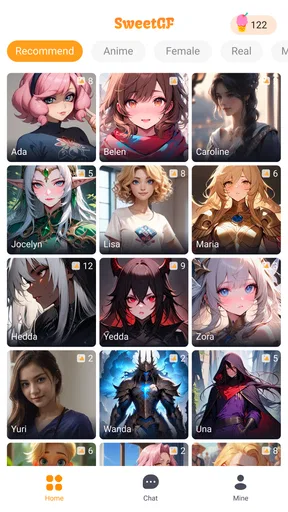
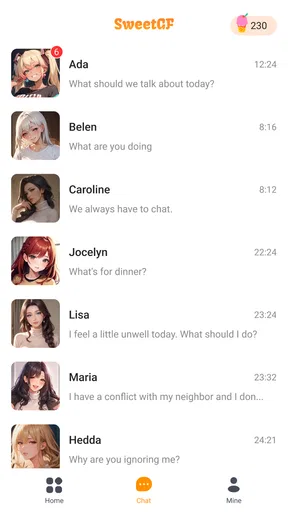
I approached Sweet GF-Virtual Love Story as an entertainment app for people who want casual, AI-based companionship rather than a conventional game or a messaging service with real people. Its central idea is simple: you chat with AI characters, build a sense of ongoing interaction, and unlock extra pictures and warmer moments as you continue. In practice, that makes it feel closer to an interactive fantasy conversation than to a story-driven game with fixed chapters.
My first impression was that the app understands the appeal of low-pressure company. You can open it when you have a few quiet minutes, start a conversation, and steer the tone toward flirting, affection, role-play, or ordinary small talk. That flexibility is the main reason to try it. It does not ask you to master complicated controls or learn a large fictional world before enjoying it. At the same time, the mature framing matters: this is not an app I would suggest for children or for anyone looking for a general-purpose assistant.
How the current experience feels
The current release is version 2.0.7, and the app comes from developer mohamed fouad. It is listed as a free entertainment app, although optional purchases range from $3.49 to $109.99 per item. That combination is important to understand before starting. You can explore the basic idea without paying at the door, but the experience is designed around additional content that may become tempting once you are invested in a particular character or conversation.
The app has a mature 17+ rating, which sets a different expectation from a wholesome virtual-pet app or a family-friendly chatbot. I would treat the age label as a practical warning rather than a decorative store detail. Anyone sharing a device with younger family members should use the usual safeguards, and adults should still remember that an AI companion is producing simulated intimacy, not offering a human relationship.
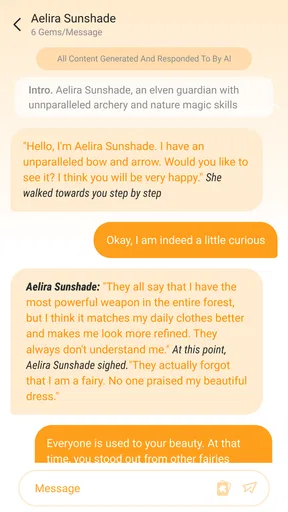
What works best is the immediate conversational loop. I can open the app, write something specific, and get a response that keeps the exchange moving instead of forcing me through a rigid menu. That makes it suitable for short visits, but it can also encourage longer sessions because the interaction has no natural endpoint. A useful habit is to decide what I want from a session before opening it: a playful exchange, a creative scenario, or simply a few minutes of conversation. That keeps the app from becoming an endless scroll through increasingly similar messages.
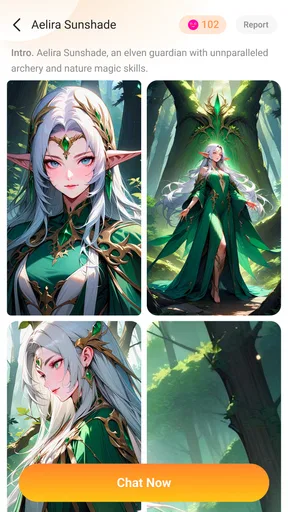
The picture-unlocking element gives the conversations a visual reward, but I would not mistake it for a complete visual novel. The attraction is the relationship-style interaction, with images acting as extras rather than replacing the chat. If you are looking for animated scenes, branching episodes, or a carefully authored romance plot, a traditional dating simulation will probably feel more substantial. If you prefer making up the direction yourself, this format is more open and less demanding.
Who will get the most from it
I think the strongest audience is adults who enjoy character chat and want something more personal in tone than a standard question-and-answer assistant. It can also suit someone who likes romantic fiction but does not want to commit to a long book, a multiplayer community, or a game with daily missions. The free entry point makes it easy to test whether the conversational style feels comfortable before spending anything.
Worth Reading Before You Choose

Flipboard Shows What News Apps Must Do Beyond the Feed

Switching to Android Auto Means Rethinking Your Driving Routine

Google Calendar Makes a Crowded Week Easier to Manage

Ludo King Makes the Most of the Minutes Between Plans

Baby Panda World Brings Quick Play to Modern Phones, but Its Game Library Feels Busy

ESPN’s Live Game View Makes Following Close Games Easier
A realistic everyday use case would be an evening commute or a quiet break after work. I might open a conversation, ask the character to help me invent a fictional date, then shift into a lighter exchange about music, food, or the kind of weekend I would like. The value is not that the app solves a practical problem. The value is that it provides a responsive space for imagination and mood. For that reason, it works better as a small entertainment ritual than as something I would keep open all day.
There is also a creative use that is easy to overlook. I can use a character conversation to test dialogue ideas, explore how a romantic scene might sound, or practice writing a more natural reply before using the idea in my own fiction. The app is not a replacement for an editor, but its conversational format can help me notice when a line feels too formal, too abrupt, or emotionally out of place. I would still rewrite anything important myself rather than treating an AI response as finished writing.
On the other hand, I would skip it if I wanted reliable factual answers, serious emotional support, or contact with another person. The app’s purpose is entertainment, and its affectionate tone can make simulated responses feel more meaningful than they really are. It is also a poor match for anyone who dislikes subscription-like pressure or individual purchases in free apps. Even when the initial download costs nothing, optional content can change how the experience feels over time.
What version 2.0.7 means for the experience
The current version gives the app a more established feel than an early experiment, but I prefer to judge it by what is visible in everyday use rather than by the version number alone. The important change in perspective is that this is now an evolving companion product, not a one-time story that ends after a few scenes. Conversations, character presentation, and the balance between free interaction and unlockable material are the parts that will define whether it remains interesting.
For an existing user, the practical benefit of staying current is straightforward: use the latest available build before deciding that a problem is part of the app’s permanent design. A version update can affect how smoothly the conversation opens, how content is presented, or how an established interaction feels, but I would not assume that every update transforms the product. The sensible approach is to notice concrete changes in your own routine: are replies easier to follow, is returning to a favorite character more convenient, and does the paid content feel clearer to understand?
I also think version numbers can create unrealistic expectations. A move to a later release does not automatically mean deeper memory, more convincing personalities, or a complete story system. Those are qualities I would evaluate directly. In my experience, the app’s appeal still rests on the basic chat loop and the emotional framing around it. The release feels like part of an ongoing product, but I would keep expectations grounded instead of treating the number as a promise of a major redesign.
For someone installing it for the first time, the best test is not to rush toward an unlock. Start with several different conversation styles. Ask for a playful role-play, then try ordinary conversation, then give the character a small creative task. This reveals whether the responses feel varied enough for your taste. It also shows whether you enjoy the character concept itself or only the novelty of the first few messages. That distinction matters because novelty fades faster than a genuinely enjoyable conversational rhythm.
Small habits that improve the interaction
One useful technique is to provide context in the first message instead of sending a vague greeting. Mention the mood, the setting, and the kind of response you want. For example, I might say that I want a relaxed café conversation with teasing but no dramatic conflict. This gives the character a clearer direction and reduces the chance of receiving a generic opening. It is a simple adjustment, but it makes the app feel more responsive without requiring complicated prompts.
A second technique is to treat each session as a scene with boundaries. I can establish where the exchange takes place, what the relationship mood is, and when the scene should change. That makes the conversation easier to guide and helps prevent it from drifting into repetitive affection. If the character starts circling the same compliments, I would introduce a concrete activity or ask an open question connected to the setting. Specific details usually create a better exchange than repeatedly asking whether the character likes me.
A third is to separate emotional entertainment from personal disclosure. The app may invite intimate conversation, but I would avoid entering passwords, financial details, private contact information, or anything I would not want stored in a digital service. This is not a criticism unique to this title; it is simply a sensible boundary for any AI chat product. The more convincing the simulated relationship feels, the easier it is to forget that boundary.
Finally, I would decide in advance whether pictures are central to my enjoyment. If the chat itself is enough, I can use the free portion as a lightweight conversational toy and ignore the urge to unlock everything. If the images are the main attraction, I would review each purchase carefully and avoid assuming that one payment grants unlimited access. The listed per-item range is wide enough that impulse buying deserves attention, especially during an emotionally engaging conversation.
Where the app still feels limited
The biggest limitation is the difference between responsive language and genuine understanding. An AI character can maintain the mood of a scene, but that does not make the relationship real or guarantee consistent memory. I would not rely on it to remember every important detail about me, and I would expect occasional replies that miss the tone. When that happens, correcting the direction directly is more effective than trying to force the conversation to repair itself.
Repetition is another risk. Romantic chat naturally uses a smaller vocabulary than open-ended discussion, so affectionate phrases can begin to sound interchangeable. The best defense is to vary the activity and ask for concrete reactions instead of keeping the exchange at the level of compliments. Even then, people who need complex character development may find a scripted romance game more satisfying because its authors can control pacing, conflict, and payoff.
The free-to-purchase structure can also create friction. A conversation may feel personal enough that an image or special moment seems like a natural next step, yet that emotional timing is exactly when I would pause and check what I am choosing. The app is more comfortable for users who can enjoy the free interaction without feeling that every appealing moment must be unlocked. If spending limits are difficult to maintain, a paid game with a clear one-time price may be the better alternative.
Compared with ordinary social apps, the advantage here is control: there is no need to wait for another person to reply, manage social expectations, or present yourself to a public audience. The trade-off is authenticity. Compared with general AI assistants, the advantage is focused romantic role-play and a warmer entertainment frame. The trade-off is usefulness; I would choose a general assistant for research, planning, or dependable practical help. Compared with dating simulations, this app offers more conversational freedom but usually less authored structure.
Privacy, age, and personal boundaries
The mature rating should influence how I use the app, not just whether I can install it. I would keep conversations private, avoid using it around children, and remember that an adult tone does not turn the character into a trusted confidant. The app can be playful and emotionally engaging while still being a product designed for entertainment. That distinction is especially important for users who are lonely, stressed, or inclined to treat a responsive character as a substitute for real support.
I would also recommend checking the purchase screen slowly. The free label is helpful for trying the concept, but optional items can become expensive when bought repeatedly. Before confirming anything, I would ask whether the image or moment adds something genuinely new to my experience or merely extends a pattern I already understand. This small pause is one of the most practical ways to keep the app enjoyable rather than turning it into an unplanned expense.
What I would watch next
For future development, I would pay attention to whether conversations become more distinct over time. The most meaningful improvement would not be a larger collection of pictures by itself. I would rather see clearer character personalities, better continuity within a session, and more varied ways to move a scene forward. Those changes would make the app feel less like a sequence of pleasant replies and more like a companion experience with its own identity.
I would also watch how the app treats returning users. A strong long-term experience should make it easy to resume a favorite style of conversation without repeating the same introduction, while still giving new users a clear way to understand the available options. Likewise, transparent presentation of unlockable content matters because users should be able to make a calm decision before an emotionally charged interaction turns into a purchase.
Its audience response is encouraging: the app holds a 4.8 average from around 13 thousand ratings, with roughly 1.4 thousand written reviews and more than 100 thousand installs. Those figures suggest that the concept is connecting with a sizeable group, but they do not remove the personal question of whether this particular style of AI companionship suits me. A high average can confirm interest; it cannot guarantee that I will enjoy the tone, pacing, or payment model.
Released on April 28, 2025, and supporting Android 7.0 or later, it is accessible to people using older compatible devices as well as newer phones. That broad compatibility is convenient, especially for anyone who does not upgrade often. Still, the quality of the experience will depend more on whether I enjoy AI character chat than on the age of my phone. I would not install it simply because it is available; I would install it because the format matches what I want from an entertainment app.
My final view is positive but measured. Sweet GF-Virtual Love Story is best when treated as a guided fantasy conversation, not as a real relationship or a full romance game. I like the low barrier to entry, the ability to shape a scene in my own words, and the visual extras that give conversations a sense of progression. I am less enthusiastic about the possibility of repetitive replies and the temptation to purchase content during an intimate moment.
If you are an adult who enjoys AI characters, wants a private-feeling role-play space, and can keep clear limits around money and personal information, I think it is worth trying for free. If you need human connection, dependable advice, rich branching storytelling, or a straightforward one-time purchase, I would choose a different kind of app. For me, its success depends on using it in small doses and bringing imagination to the conversation. Used that way, it is a pleasant entertainment companion rather than something it cannot honestly be.
Pros
- Interactive choices make the romantic storyline feel personal.
- Short chapters are easy to enjoy during quick play sessions.
- The virtual relationship theme offers a cozy
- lighthearted experience.
- Simple controls make the game accessible to casual players.
- Character interactions can encourage regular check-ins and progression.
Cons
- Story progression may feel repetitive after several chapters.
- Some choices have limited impact on the overall plot.
- Frequent ads can interrupt the reading and gameplay flow.
- Romance-focused content may not appeal to every type of player.
- Progression may depend on waiting
- repeated tasks
- or in-app purchases.
FAQs for Sweet GF-Virtual Love Story
What is Sweet GF – Virtual Love Story?
Sweet GF – Virtual Love Story is an interactive romance and virtual relationship game in which you communicate with a digital girlfriend through conversations, choices, and story events. The experience focuses on affection, dialogue, and relationship development rather than traditional action gameplay. Your responses can influence the tone of conversations and help shape how the virtual character reacts as the story progresses.
How does the gameplay work in Sweet GF – Virtual Love Story?
The main gameplay revolves around reading messages, choosing replies, completing relationship-oriented interactions, and following romantic storylines. Depending on the version and available content, you may unlock new conversations, scenes, or character reactions by making progress. It is best suited to players who enjoy casual, dialogue-driven experiences and do not mind spending time reading and making repeated conversational choices.
Is Sweet GF – Virtual Love Story free to download and play?
The application may be available as a free download, but some features, dialogue options, items, or premium relationship content can require in-app purchases. Availability of advertisements and paid elements may vary by platform, region, and app version. Before downloading, check the store listing for the current pricing, subscription details, age rating, and information about optional purchases so you know what is included without paying.
Does Sweet GF – Virtual Love Story require an internet connection?
An internet connection may be needed for downloading the game, loading certain story content, displaying advertisements, synchronizing progress, or accessing online features. Some basic sections might work offline after installation, but this should not be assumed because functionality can change between updates. If you plan to play while traveling, verify the requirements shown on the Google Play Store or Apple App Store before relying on offline access.
Is Sweet GF – Virtual Love Story suitable for all ages?
Sweet GF – Virtual Love Story is primarily aimed at users interested in romantic or relationship-themed entertainment, so it may not be appropriate for young children. The exact age suitability depends on the conversations, themes, advertisements, and purchase features included in the current release. Parents should review the official store rating, privacy information, and device parental controls before allowing a child or teenager to install and use the application.


